Our advocacy starts with your experience.
WSLHA’s Clinical Practice and School Committees are where many of our advocacy priorities begin. Members bring the challenges they see every day, like caseload pressures, billing hurdles, and gaps in access, and those stories help us identify which problems need solving at the state and national level. When you join a committee, your experience directly shapes the issues WSLHA takes to Olympia and beyond.
Connecting Washington to the national conversation
Three WSLHA volunteers serve as liaisons between our members, WSLHA, and ASHA. Each month, they meet with ASHA staff and fellow state liaisons from across the country to share what’s happening on the ground and bring national updates home.
That two-way exchange matters. Every state has its own laws, licensing boards, and requirements, which makes national advocacy complicated. When Washington’s experiences reach the national table, and national strategies are adapted for Washington, advocacy works better for everyone.
Our Dedicated Advocacy Volunteers:
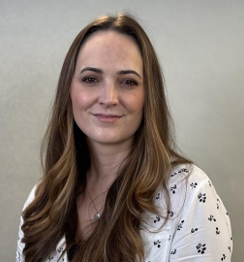 State Advocate for Medicare Payment (StAMP)
Current Volunteer: Lindsey Greathouse
Fall 2026 Update: Recent meetings have been heavily focused on the deletion of CPT 92507, which represents the majority of SLP treatment sessions.
What’s changing
On January 1, 2027, CPT 92507 will be removed from the CPT code set and replaced by 10 more specific, timed codes. Here’s the catch: not every payer will switch on the same day. Some Medicaid programs and commercial insurers may keep accepting 92507 until they update their own fee schedules and systems. Always follow each payer’s published fee schedule and billing policy rather than assuming a uniform start date.
What you can do now
- Keep 92507 and add the 10 new codes in your EMR during the transition. If the proposed pediatric G-code is finalized, you may need to add that too, for as many as 12 related codes.
- Contact your payers directly to ask when and how they’ll implement the new codes. Some national payers have already published rates, but adoption varies widely.
- Brush up on timed-code rules. The 51% rule may apply to the base and final add-on code, but only after the full base-code time (and any previous add-on interval) is complete. Individual payers may set their own rules.
- Use ASHA’s free resources, including payer letter templates, readiness checklists, a payer/CPT tracker, quick guides, and code-by-code videos.
Still unknown
The pediatric G-code’s status won’t be clear until the Medicare Physician Fee Schedule final rule is released this month. STARs also raised strong concerns that the new codes build in only limited pre- and post-service time, which doesn’t reflect the coordination with families, schools, and other providers that pediatric care often requires.
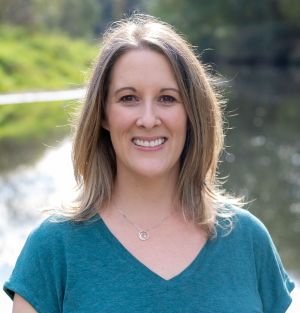 State Advocate for Reimbursement (STAR)
Current Volunteer: Kate Pilant
Fall 2026 Update: Discussion continues to be almost entirely around the transition away from CPT 92507 with national efforts continuing to work on coordinating with Medicaid and commercial insurers regarding their implementation plans. There is a national database of insurers started to coordinate and communicate their implementation when verified, however, many details remain unknown until after CMS releases the final values of the new codes.
Lessons from other states
STARs shared strategies that are working elsewhere, including:
- Asking Medicaid for prior authorization continuity, so existing authorizations carry over to the new codes
- Requesting grace periods to reduce administrative disruption
- Updating IFSPs administratively rather than holding new review meetings
- Working through state Medicaid Technical Advisory Committees to reach Medicaid and managed-care organizations
- Reviewing how past code splits were crosswalked, which in one state led to higher reimbursement
ASHA is also exploring a shared resource where states can post payer adoption dates, fee schedule updates, and advocacy materials.
 State Education Advocacy Leader (SEAL)
Current Volunteer: Kristin Sherwood
Fall 2026 Update: As your ASHA SEAL (State Education Advocacy Leader), I’d like to share a few current topics of interest. SEALs representatives from each state meet monthly. In addition, western region SEALs meet quarterly to address current, pertinent issues.
ASHA has updated a Workload Calculator that is available for members to track your workload duties completely and efficiently. This would be an excellent tool to use to demonstrate the totality of our workload duties to administrators and district leadership, and can be particularly effective during bargaining years. You can find a 2-minute Workload Calculator tutorial video, as well as a recording of a recent demonstration at https://www.asha.org/slp/schools/workload-calculator/.
Regionally, SEALs discussed AI Policies and Use in Schools. Currently, most states reported no formal state-level AI guidance, leaving districts to develop their own policies. Key takeaways: There is growing interest in AI for documentation, data collection tools, therapy materials, and educational purposes. We have concerns regarding privacy, FERPA/HIPAA compliance, and appropriate clinical use. Additional guidance specific to school-based SLP practice is needed.
Workforce challenges were also discussed. Key takeaways: Recruitment and retention challenges continue across states. Some promising strategies include Grow Your Own programs, SLPA pathways, university partnerships, and telepractice solutions.
Want to share a concern, or hear from our team about what's happening locally or nationally? please email us at [email protected]. we'd love to setup a meeting with you!
Look for Sip & Chats starting in 2027!
|